Why “Easy” Treks Cause More Injuries Than Difficult Ones
How underestimation, crowd behavior, and casual preparation make “easy” trails more dangerous than they appear!
On popular weekend treks in India, forts near cities, forest trails, and short hill routes, injuries rarely happen where people expect them. Not on knife-edge ridges or technical climbs, but on wide paths labeled easy, surrounded by crowds, phones out, confidence high.
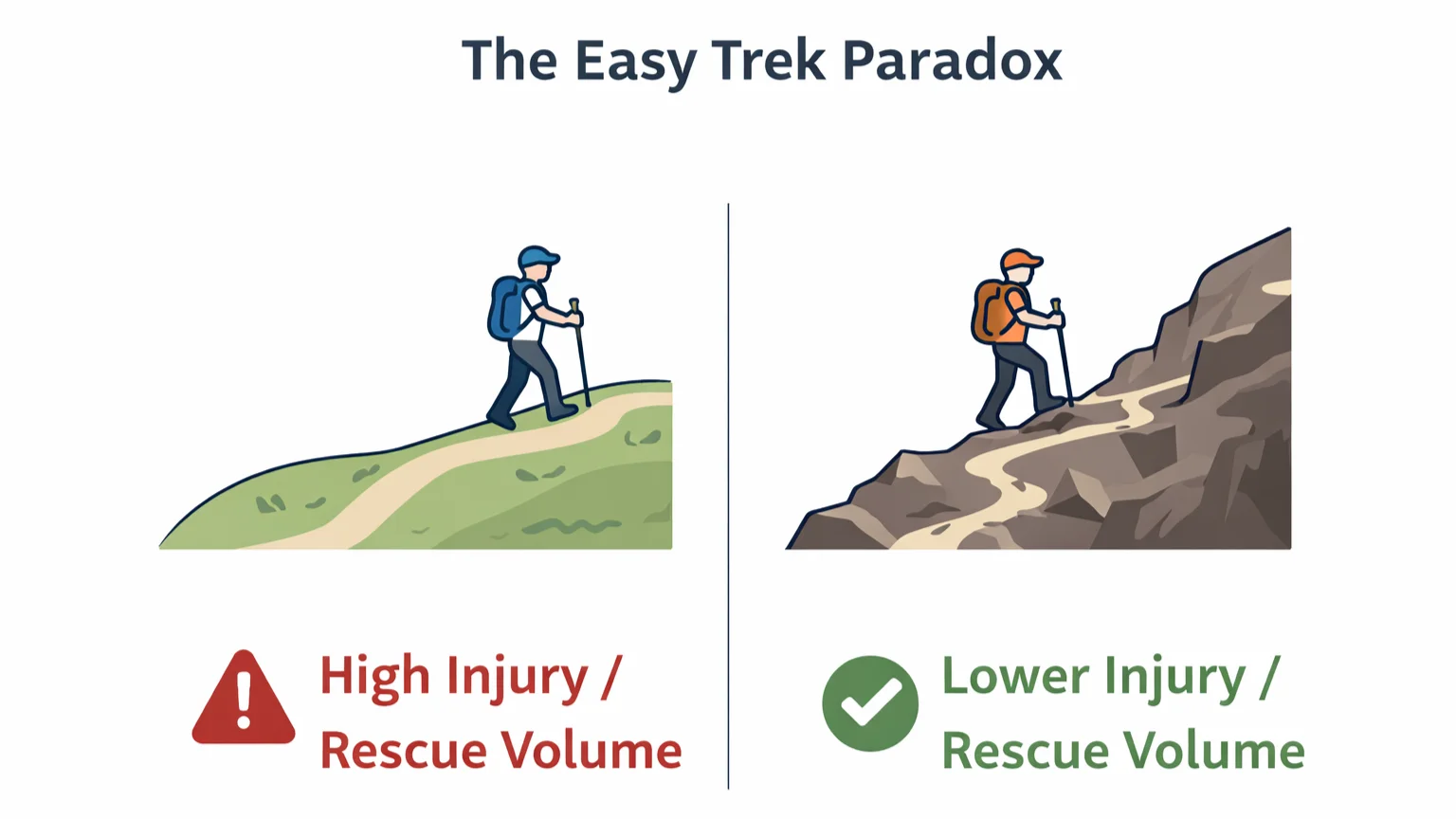
This pattern surprises first-time trekkers to learn that easy treks cause more injuries than the challenging ones. It shouldn’t.
Across hiking regions worldwide, data and rescue records repeatedly show the same contradiction: easy and moderate trails account for a disproportionate number of injuries and evacuations. The reason isn’t poor trail design or bad luck. It’s human behavior.
Table of Contents
🌄 This article explains why “easy” treks quietly injure more people than difficult ones, by unpacking how the mind, the body, social influence, and preparation standards change the moment a trail feels safe.
When “Easy” Turns the Brain Off
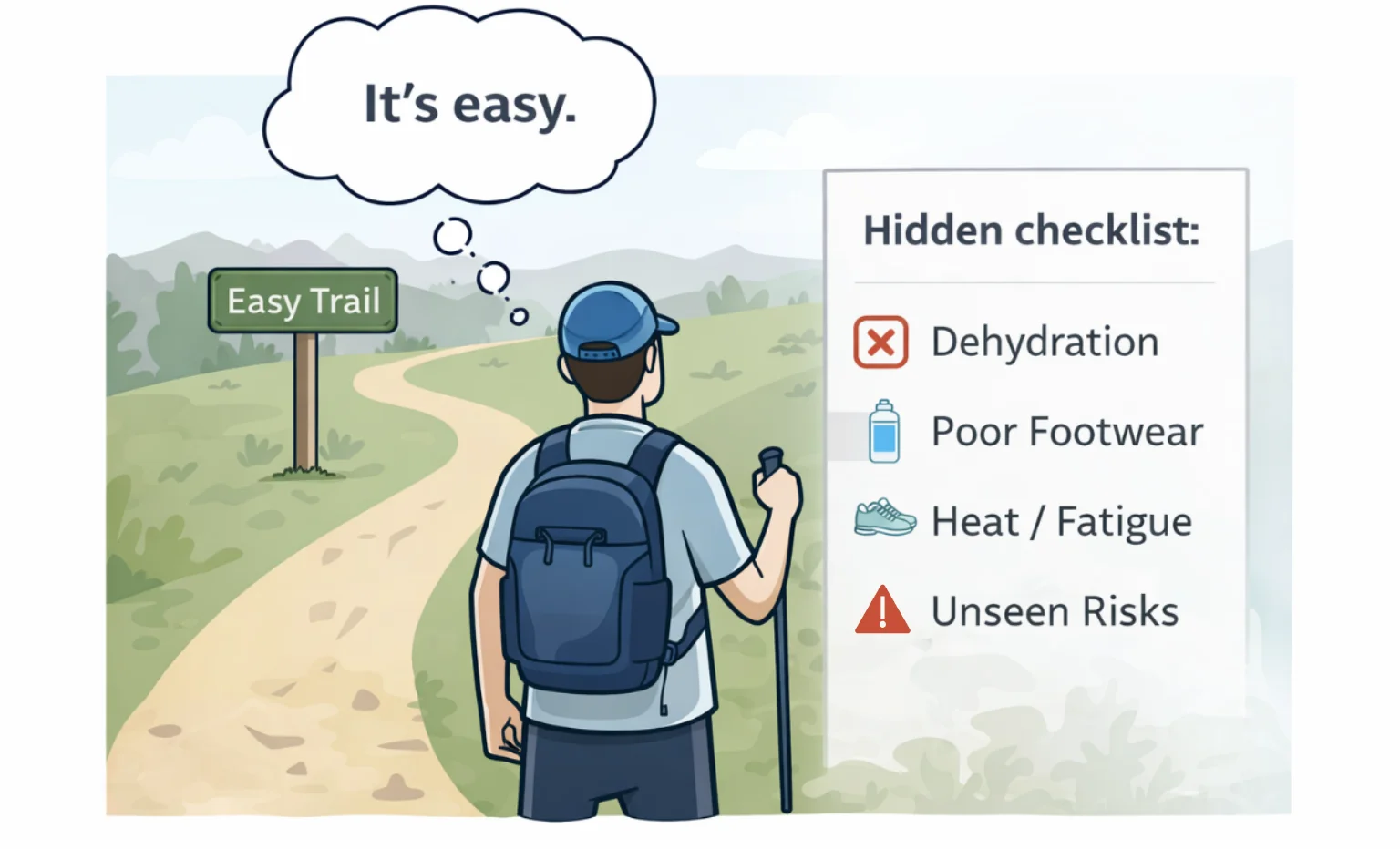
The trail moment
You reach the trailhead. Families, casual shoes, light backpacks. Someone says, “It’s just an easy walk.” Without realizing it, your brain relaxes.
Why this happens
On difficult treks, uncertainty forces alertness. The mind enters a risk-assessment mode, checking footing, weather, hydration, and pace. Easy trails fail to trigger that switch.
Several well-studied cognitive biases take over:
- Dunning–Kruger effect: Limited experience creates overconfidence. Completing a short, flat hike convinces people they’re ready for longer or steeper terrain.
- Optimism bias: Accidents happen to others, not to me.
- Survivor bias: “I did this last time without water / proper shoes and nothing happened.”
Add heuristic traps like familiarity (“I’ve been here before”) and commitment (“I’ve come this far”), and the brain stops questioning decisions altogether.
Consequences
- Sloppy foot placement
- Ignored weather changes
- Poor pacing and hydration
- Delayed turn-around decisions
A twisted ankle two kilometers from the trailhead is no less serious than one on a remote ridge, but the preparation gap makes recovery harder. This pattern appears repeatedly among first-time trekkers in India, especially when preparation decisions are shaped by assumptions rather than experience.
✅ Key Takeaway: Trail difficulty labels describe terrain, not consequence. The body pays the same price for mistakes anywhere.
Crowds, Cameras, and the Illusion of Safety
The trail moment
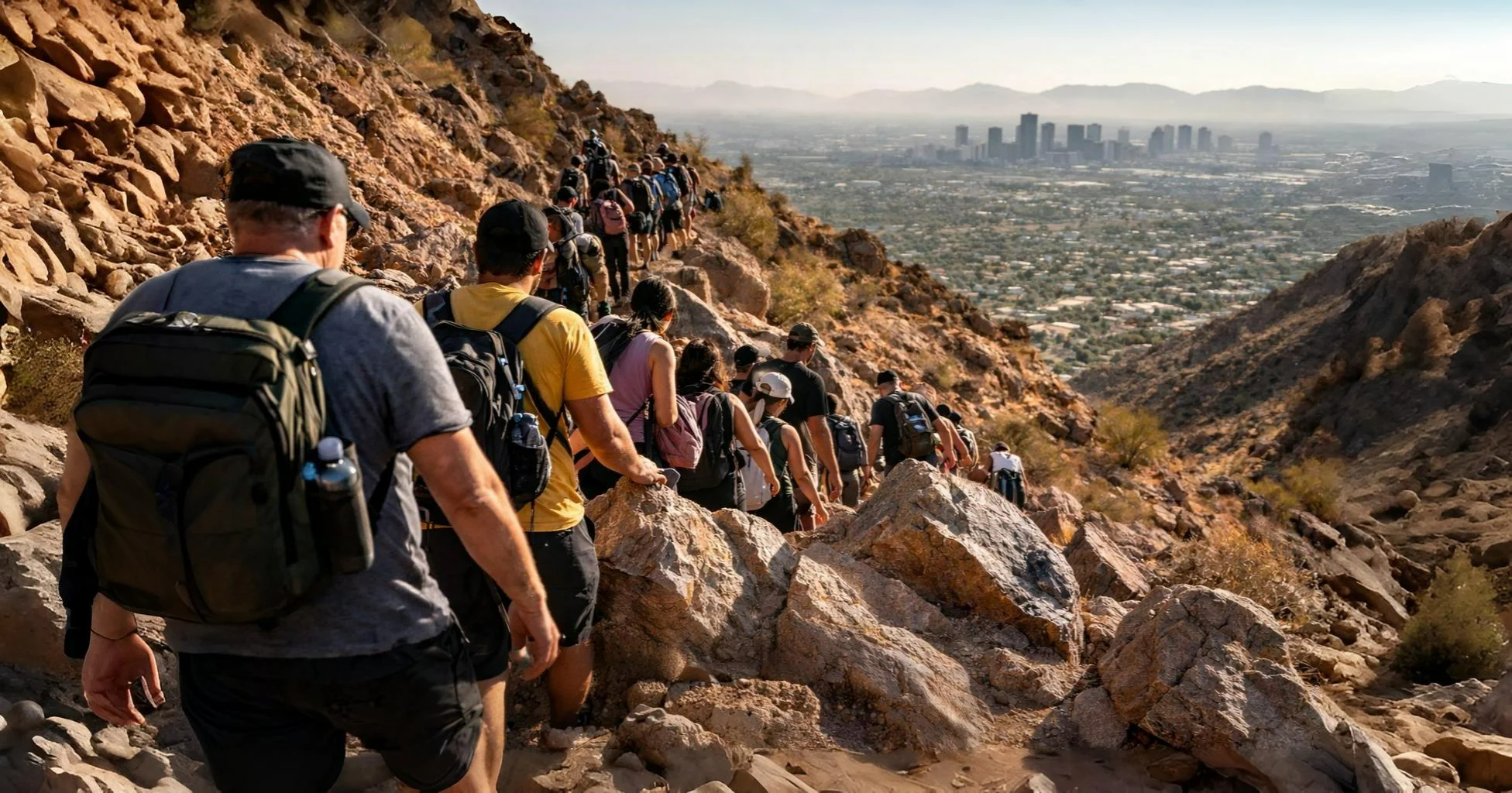
Dozens of people ahead. Someone shooting a reel. Children walking past. It feels controlled, almost urban.
Why this happens
Humans outsource risk judgment to groups. This is social proof, the assumption that if many people are doing something, it must be safe.
Social media amplifies this effect. Perfect summit photos create cognitive ease: the task looks simple, so the mind assumes it is.
On Indian weekend treks — forts, temple approaches, monsoon viewpoints, this leads to:
- Crowd congestion on narrow sections
- Rushed descents to beat traffic
- Unofficial shortcuts (“social trails”) that look safe but aren’t maintained
Consequences
- Slips on eroded shortcuts
- Falls during congested descents
- People following unsafe paths simply because others are using them
Crowds increase exposure time and distraction; they don’t reduce risk.
⚠️ Critical Consideration: Other people on the trail are not safety equipment.
Why Phones and GPS Make People Take Bigger Risks
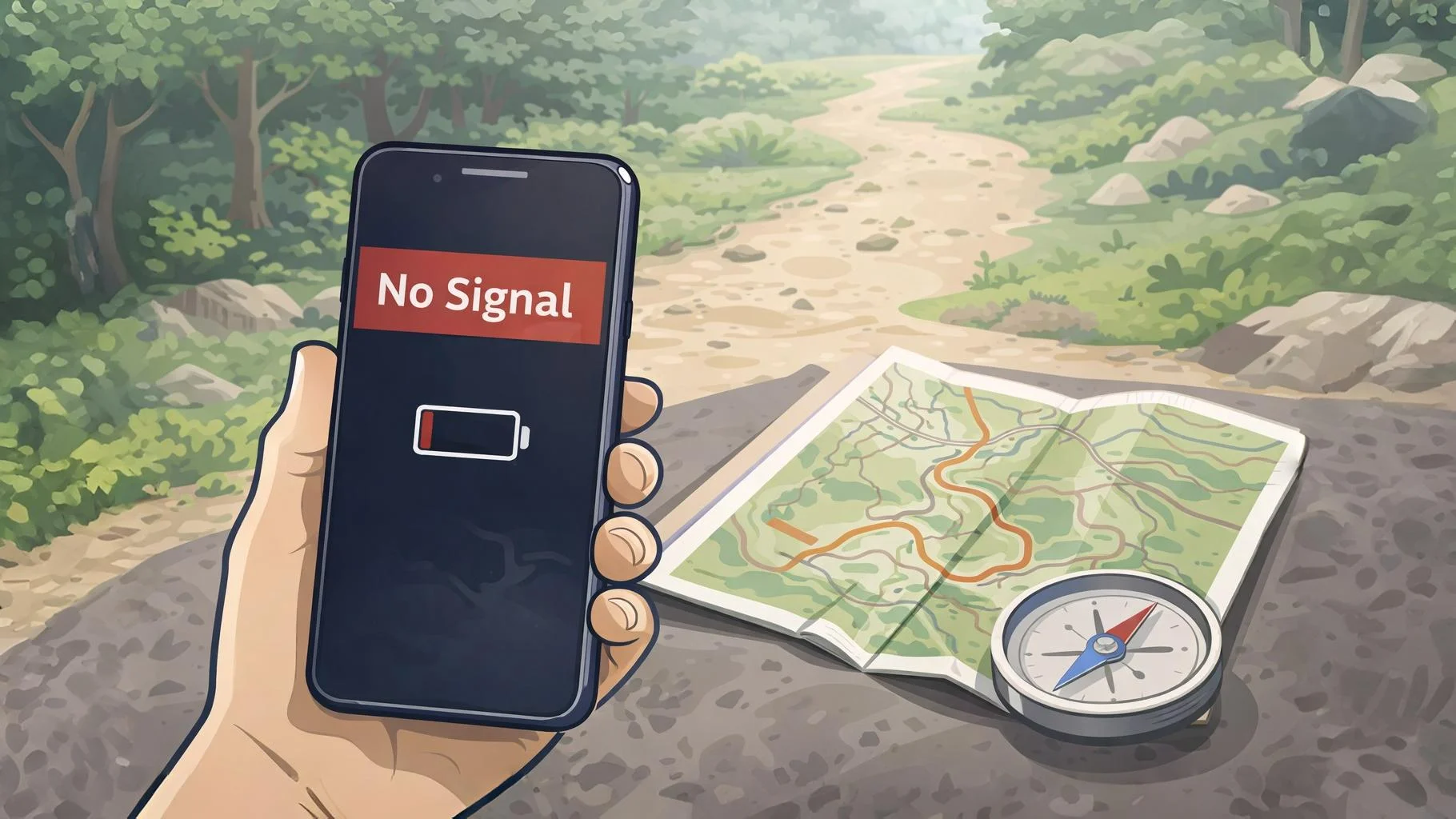
The trail moment
Low water. Late afternoon. Someone says, “Worst case, we’ll call for help.”
Why this happens
Modern technology creates rescue complacency. Phones, GPS apps, and satellite devices feel like guarantees, even when they aren’t.
This leads to risk homeostasis: people take greater risks because they believe the cost of failure is reduced.
Reality is harsher:
- Batteries die faster in heat or cold
- Network coverage drops in valleys and forests
- GPS apps lack real terrain judgment
- Rescue teams take hours, sometimes an entire day, even near trailheads
Consequences
- People start late, unprepared
- Minor injuries turn serious while waiting
- Overconfidence replaces contingency planning
Technology saves lives, but it cannot replace preparation.
✅ Key Takeaway: Emergency devices are backups, not permission slips.
How “Easy” Treks Cause More Injuries to the Body Quietly
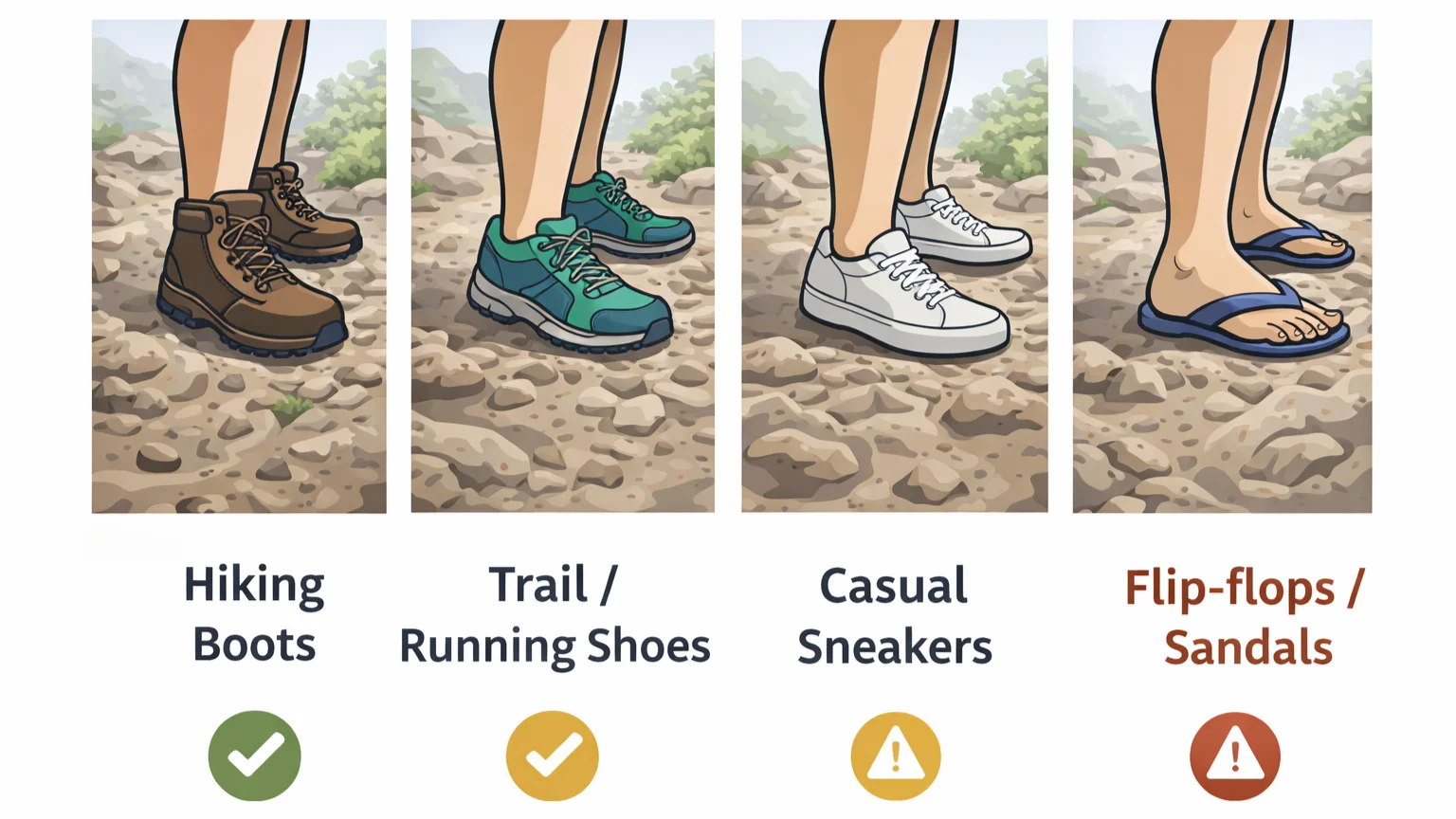
The trail moment
It’s hot. The path looks manageable. You don’t feel thirsty. You’re eager to finish.
Why this happens
“Easy” trails encourage neglect of basics:
- Dehydration: Sweat evaporates quickly in dry or breezy conditions, masking fluid loss. Dehydration reduces coordination and judgment.
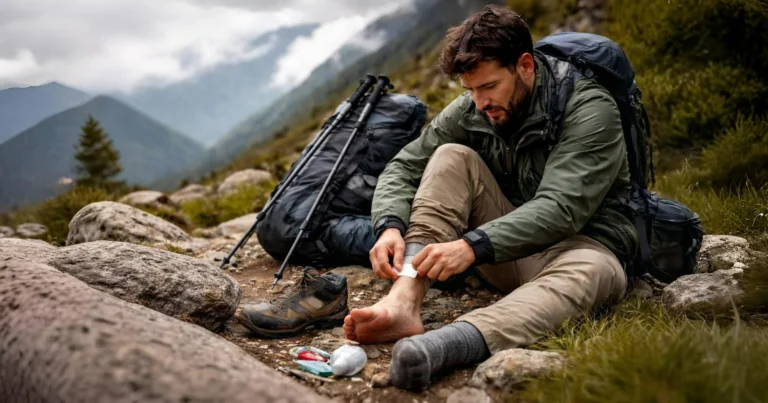
- Improper footwear: Casual shoes or sandals lack ankle support and traction, altering gait and increasing fall risk.
- Fatigue timing: Most injuries occur between 12 PM and 6 PM, when heat, fatigue, and hurry intersect.
Downhill walking compounds the problem. Descents load joints eccentrically, especially knees and ankles, at the exact moment focus drops.
Consequences
- Rolled ankles (the most common hiking injury)
- Knee pain during descent
- Falls close to the trail exit
✅ Key Takeaway: Most “easy trail” injuries are physiological failures, not dramatic accidents.
Why Difficult Treks Often See Fewer Injuries
The trail moment
Quiet trailhead. Early start. Heavier packs. Fewer people. More caution.
Why this happens
Difficult terrain commands respect. Fear activates preparation:
- Better footwear and gear
- Slower pacing
- Frequent self-checks
- Earlier turn-around decisions
People expect difficulty, so they behave accordingly.
Consequences
- Fewer careless slips
- Better hydration discipline
- More conservative judgment
Paradoxically, perceived danger protects people.
✅ Key Takeaway: Respect prevents injuries more effectively than strength or fitness.
Why This Pattern Is Stronger on Indian Weekend Treks
In India, the paradox intensifies because:
- Trails are highly accessible from cities
- Many treks are marketed as “one-day” or “easy”
- Monsoon conditions change terrain rapidly
- Rescue may still be delayed despite proximity
The result is a large number of first-time or casual trekkers encountering real wilderness variables without a wilderness mindset.
Respecting the “Easy” Trail
The Easy Trek Paradox isn’t a failure of trail design. It’s a failure of perception.
When a trail feels safe, vigilance drops. When vigilance drops, preparation follows. And when preparation fails, the body pays, regardless of elevation or difficulty.
Breaking this pattern requires metacognitive hiking: awareness of our own biases, limitations, and assumptions.
Easy treks deserve the same fundamentals as difficult ones:
- Proper footwear
- Adequate water
- Realistic timing
- Willingness to turn back
The trail does not change its rules because we label it “easy.”
Only our behavior does.
FAQs: The Easy Trek Paradox Explained
If a trail is labeled “easy,” shouldn’t it be safe?
Not necessarily. Trail ratings describe terrain difficulty, not overall safety. An “easy” trail may still involve extreme heat, dehydration risk, slippery rocks, exposed sections, or limited access to help. Safety depends more on preparation, fitness, timing, and awareness than on the rating itself.
I always hike with my phone. Isn’t that enough for safety?
A phone is a helpful tool, but it’s not a safety guarantee. In many hiking areas, signal is unreliable or absent, and batteries drain quickly in heat, cold, or while searching for reception. Phones should supplement, not replace basic essentials like extra water, navigation tools, and first aid.
Why are ankle injuries so common on easy trails?
Easy trails often contain subtle hazards, loose gravel, uneven stones, and shallow roots that don’t look dangerous at first glance. When hikers are less alert, these minor irregularities lead to rolled ankles and falls. Inadequate footwear, such as casual sneakers or sandals, significantly increases this risk.
How does social media make hiking more dangerous?
Social media creates an illusion of simplicity. Photos and short videos rarely show fatigue, heat exposure, route finding, or preparation. This leads many people to underestimate difficulty and overestimate their readiness. It also concentrates crowds on photogenic trails, increasing congestion and environmental stress.
What is “rescue complacency,” and how can I avoid it?
Rescue complacency is the belief that technology guarantees fast help, which encourages riskier decisions.
To avoid it:
1) Plan every hike as if you cannot call for help
2) Assume rescue, if needed, may take hours or longer
3) Make conservative decisions early, before small problems escalate
Your most reliable safety system is preparation, not rescue.
What are the essentials for even a short, easy hike?
The 10 Essentials still apply, even on short outings:
1) Navigation (map and compass)
2) Headlamp or flashlight
3) Sun protection
4) First-aid kit
5) Knife or multi-tool
6) Fire starter
7) Emergency shelter (e.g., space blanket)
8) Extra food
9) Extra water (more than you expect to need)
10) Extra clothing
For short hikes, you can scale down size, but not categories.
Why do so many hiking accidents happen in the afternoon?
Most injuries occur during a fatigue-and-heat window, typically between midday and early evening. By then, hikers are often dehydrated, mentally tired, and rushing to finish. Heat peaks, coordination declines, and judgment becomes less reliable.
How can I stay safety-focused on “easy” trails?
Practice metacognitive hiking, thinking about your own limits and assumptions:
1) Before starting, ask: “What could realistically go wrong here?”
2) At the trailhead, do a quick gear and mindset check
3) During the hike, regularly assess energy, hydration, and conditions
Treat turning back as good risk management, not failure
Last updated: January 27, 2026
We review and update our guides periodically based on new field insights, safety advisories, and reader feedback.